

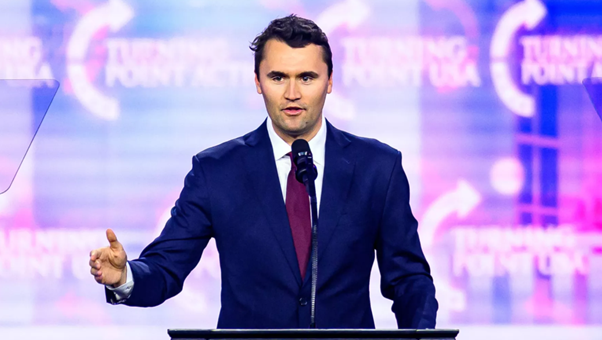
 Charlie Kirk was an active evangelical Christian with an influential ministry called Turning Point USA.
He was vocal about his faith with everyone, particularly youth and students and in the political arena (to the point of working with and forming a friendship with the President of the United States himself, Donald Trump).
However, at only 31 years old, he was unexpectedly assassinated in September 2025, sending shock waves around Christianity and the world.
Charlie’s final book is now released

He wrote six books in total, some of which were New York Times best sellers, and all of which gained more popularity after his assassination, in addition to his huge online presence and influence.
The last book he wrote was completed in the summer of 2025 after eighteen months of preparation just a few months before his death, and was released for sale in December 2025.
This is on a topic you don’t hear much about nowadays - taking one day a week off as a ‘Sabbath’ rest.
It’s one of the Ten Commandments within Christianity, but mostly ignored by the faith today, not just society, to their detriment, as Charlie points out.
It’s assumed to be either no longer applicable as an obligation under the New Covenant relationship with God through Christ, or loosely transferred to a Sunday rather than the original seventh day of the week, a Saturday (which Judaism still follows).
But Charlie thought otherwise, including myself with my own testimony here about how I believe God revealed the importance of this weekly rest on the day He has blessed (and a more detailed explanation of the subject here).
I've also summarised what Charlie literally said on the subject of the Sabbath here after going through online videos of him and transcribing over 7,000 of his words. I've then concluded seven aspects about this from Charlie.
Back to Charlie's book on the subject called - Stop, in the Name of God: Why Honoring the Sabbath Will Transform Your Life, you can buy this at usual places like Amazon and other outlets, depending on your country.
What the book has to say about the Sabbath
To begin with, here’s the official description of the book that has been released:
"Stop, in the Name of God: Why Honoring the Sabbath Will Transform Your Life will help you discover how observing the Sabbath isn't a rejection of modern life but a rebellion against busyness and a pathway to genuine connection, peace, and presence. Through Stop in the Name of God, bestselling author Charlie Kirk guides you on how to unplug, recharge, and reconnect with God, family, and yourself in a way that nurtures your soul. In a world dominated by screens and constant noise, Stop in the Name of God presents the Sabbath as a radical act of resistance. Packed with practical insights and spiritual wisdom, Charlie Kirk demonstrates how honouring the Sabbath restores balance, reduces anxiety, and nourishes your soul. It's not just a day of rest-it's a lifeline to reclaiming what truly matters."
Also, there’s a moving interview here on Youtube with his wife Erika referring to this book including a quote from the book linked with sleeping.
“Because the title of it says, Jesus slept, Elijah slept, and so can you. And he said, So start tonight. Close the laptop. Power down the phone. Let the dishes wait. Pull the shades, dim the lights, and give your body permission to do what it was created to do, to rest. Let your bed become an altar of trust, as your head touches the pillow and whisper to God, I release it all to you. You don't need to check one more email. You don't need to prove anything. You don't need to carry the weight of the world. It already has a Savior and it's not you. Sleep is not a distraction from your purpose. It is part of your purpose. It is a sacred rhythm that restores your mind, heals your body, and quiets your soul. The Sabbath is your weekly reminder that you are not a machine. You are a beloved child. And children sleep well when they know their father is near. So go ahead, embrace the gift. Make your Sabbath a day not just of rest, but of sleep. Deep, joyful, and replenishing sleep. You're allowed. And more than that, you're invited. Rest isn't weakness. It's worship. And tomorrow will be better because you trusted God enough to rest today.”
Plus, she also openly reads from Charlie’s own journal to really echo what this weekly day of rest meant to him as a meaningful day of rest, both physically and spiritually.
“He said, Dear Lord, thank you for a wonderful week. Thank you for your endless protection and provision. Father God, thank you for your mercy and grace. Lord, I did better this week despite the challenges of travel. I miss my wife. It's hard to be away from her for a few days. Thank you for giving us a road map of what it means to be obedient and put Christ first. Lord, I have realized the following; The battle against the mind is Satan's playground. He dwells and prows to destroy. The more in alignment we walk in your command and teachings, the more joy and blessing we experience. Lord, thank you for showing us the way, the truth, and the life. Thank you for blessing our organization. I pray for resolution amongst the divides that Satan is attempting. Lord, we pray for blessing for the people who feel they have been wronged. Father God, we ask for your guidance, wisdom, and direction, your comfort, and your healing. We love you, Lord. Thank you for another Sabbath -CK”.
There is also a video here from Erika discussing the book's release with Charlie's ministry (and discussion within the ministry), and interview here with Fox news.
And as mentioned earlier, there’s a post here summarising seven key aspects of this rest that Charlie directly talks about in his online videos.
In terms of the structure of the book (excluding the initial Forward by his wife Erika and then Prologue, Introduction and Acknowledgements at the end), here are the chapter headings:
1. Genesis 1:1
2. Nothing doesn’t create something
3. The history of the Sabbath
4. What do you worship?
5. Science, stuff, and power: the age of counterfeit worship
6. The sabbath improves your health
7. The Sabbath improves your sleep
8. Melachah, Eved, and your dog
9. Are Christians bound to the sabbath?
10. Jesus doesn’t offer a Day – He offers Himself
11. Now it's your turn to act
12. Sabbath made simple
13. Conclusion
My own review of Charlie’s Sabbath book – 5 + 5 Points
In terms of my own review of his book after reading, here are my main ten takeaway points about it. The first five points are in complete agreement to what Charlie is saying and a brief summary of the different aspects of the Sabbath that he’s covering.
It really is a great book on the subject, and a highly recommended read! He’s done thorough research into the subject, coming from a helpful broader perspective and starting from the point of seeing how this is such a good, blessed gift from God to us, not just a theoretical idea.
In the second five points I bring in other points that I have come to appreciate myself, to complement to Charlie’s content and adding further, hopefully helpful, contributions.
These last five points increase in importance, the first one being less significant than the final one, which I think is the key issue for Christians understanding the Sabbath – whether they are 'bound' to keep it or not.
1. Charlie’s personal testimony on the Sabbath
This is the focus for the whole book, and how Charlie had a revelation and experience of the weekly Sabbath day’s rest personally as a born-again Christian. Therefore, this explanation of the subject has a depth and meaning you wouldn’t see if someone were just looking at it from just a theological study.
He genuinely saw this as a good and blessed gift from God and wants everyone to know about it (this is my own testimony on the subject as well, which you can read about here).
His wife Erika clearly states this is what he actually did, not just talk or study about:
“Week after week, no matter how crowded his calendar or how heavy the demands, he made room on Saturday to step back. He had an elevated intentionality to be present with our family, to unplug from the world, to open his Bible, and to bow his heads in prayer.” – (Forward, Erika Kirk)
At the beginning, Charlie describes the start of his Sabbath journey and how someone within his organisation challenged him to actually experience this, not just learn about it.
“I think you need to drop everything for a day. God will honour that. Look at it as a test of your faith…try it for a month. See what it does for your life. Jesus told us if we love him to follow his commands” – (Introduction, David Engelhardt)
2. Principles of Sabbath
There are so many great aspects of the Sabbath that Charlie highlights and is truly convinced of after studying them.
At the outset, he states the obvious point about this weekly best – that it is physically stopping doing things. This is the stated goal of the book, and a reference back to the original meaning of the word.
“I desire to bring all humanity back to God’s design to rest for an entire day. To cease working, to STOP, in the name of GOD” – Prologue
“The Hebrew word for “Sabbath” (Shabbat) literally means “to stop” or “to cease”. It derives from the root verb shavat…this linguistic foundation reveals the Sabbath not as absence or leisure, but a presence and consecration” – Chapter 3, page 55
He goes on to say how this was revealed to people, and wasn’t just inherited from elsewhere:
“In the ancient world, there was no parallel to the Sabbath. It was not borrowed, synthesized, or assimilated from neighbouring cultures. It was revealed.” – Chapter 3, page 56
“The Sabbath was not reasoned into existence – it was revealed. It did not arise from human exhaustion, but from divine completion…this day has not only marked rest – it has marked remembrance…It was to be a sign between God and His people; a rhythm that declared this to the watching world: We are not slaves to Pharoah, to productivity, or to profit. We are covenantal beings, set apart by grace, bound to a Lord who gives rest ” – Chapter 3, page 76
This last quote also brings in the important points about freedom with the Sabbath and not being enslaved to the busyness and demands of life and the world (in comparison to Israel being released from slavery in Egypt).
He then goes into the specific inclusion in the Ten Commandments, and not just how this stands out more than the other nine in many ways, but how it has ended up being the most ignored one today to our detriment:
“Throughout the Torah, the Sabbath is named again and again as a “sign forever”, a “delight”, a “holy convocation”, a “covenant”, and a “test”.” – Chapter 3, page 60
“As I have stated previously and repeatedly throughout this book, the Sabbath is the most ignored commandment by modern Christians to our own detriment” – Chapter 10, page 209
“And behind it all [Jewish observance] is theology. The Sabbath is not just one of the Ten Commandments – it is the only one described as a “sign” of the covenant” – Chapter 9, page 192
This last one also brings out the theme about it being a special sign and seal in the Old Testament, which he reiterates elsewhere:
“Rest is not what happens after creation; it is part of creation. It is the seal” – Chapter 3, page 58
“Its theological depth intensifies in Exodus 31:13-17, where God declares the Sabbath a “sign forever” between Himself and Israel” – Chapter 3, page 62
He then links this back to Christ who gave substance to the Sabbath and enables the Sabbath to become such an important ‘place’ in time to experience God:
“Jesus honoured the Sabbath but reoriented its meaning. His healings and teachings on the Sabbath were not abolitions of the day, but restoration of its purpose…(Matthew 12:12) – Chapter 3, page 67
“The Sabbath became a portable sanctuary, a cathedral not in stone, but in time” – Chapter 3, page 64
3. Going against the world
Chapters four and five highlight the contrast between the Sabbath and the craziness of the world, something Charlie personally experienced as he stepped away from his hectic schedule one day a week.
He identifies specific false beliefs that cause idols and take us away from the true God, one of these being worship of creation itself, not God the creator of this world:
“The biblical vision is radically different. God created the earth as good (Genesis 1:31), but not as god. He gave humanity dominion over it, not to abuse, but to steward (Genesis 1:28). Man is not a curse upon creation, bit ts caretaker under divine commission. The earth is not our mother; it is our garden. It is not to be feared or worshipped, but to be tended with gratitude, humility, and hope” – Chapter 4, page 92
The other big thing nowadays is ourselves and selfish, prideful focus:
“In a world where we have a camera pointing at us, we shouldn’t be shocked if that is all we think about. Social media platforms – Instagram, TikTok, Snapchat – have not only normalised self-obsession, they have canonized it. It is no longer enough to live a good life; you must perform a life for the approval of others. This is the worship of self, and it is not merely harmless narcissism – it is destructive counterfeit religion that draws people further from God and closer to despair…Worshipping yourself is nothing new. Infact, one of the biggest sins of the Bible is the elevation of self above God” – Chapter 4, pages 93-94
He then outlined the scientific and rational focus on things and systems rather than God Himself:
“Today, we are witnessing that exchange play out in real time. In laboratories, in policy boards, in television studios. We are being offered a new covenant: Trust the system, obey the experts, and you will be saved” – Chapter five, page 104
Another common issue is having too many material possessions and ‘stuff’ in life that actually doesn’t make us any happier:
“We live amid more material abundance than any people in human history…Biblically, this is no small issue. Jesus warned plainly, “Do not lay up for yourselves treasures on earth, where moth and rust destroy and where thieves break in and steal, but lay up for yourselves treasures in heaven” (Matthew 9:19-20) – Chapter 5, page 106
Charlie then links this back to the Sabbath in a challenging way:
“If you wonder what you worship, look at what you sacrifice for. Many sacrifice their Sabbath – that sacred day of rest and worship commanded by God – for a extra day of work, an extra shopping trip, an extra scroll through endless online sales. Many sacrifice time with their children to chase promotions, bigger homes, and higher status. Many sacrifice their financial peace to purchase things they don’t need to impress people they don’t even like. Materialism is not content to coexist quietly; it demands blood…A true Sabbath – a day set apart, a day of ceasing, a day of reorientating our lives toward God – stands as a bold rebuke to the worship of stuff…It is worth asking: What is the weight of all your stuff compared to the lightness of walking with Christ” – chapter 5, pages 107-108
4. Health and sleep
Charlie makes an interesting example of how following the Sabbath will make you generally healthier, and looking at the lifestyle of Christians in the Seventh-day Adventist church (stemming from a conference they organised in early 2025, which has the longest online video content on the Sabbath from them here). Although he outlines:
“some core theological differences [with the SDA church]…[but he] was struck by their joy and commitment to unplugging from the modern world”. – Chapter 6, page 115
He then goes on to discuss how they treat the Sabbath, which, according to the statistics, correlates with them having longer and healthier lives (as determined by the Sabbath, along with other factors such as their generally healthier diet).
“None of this is accidental. It is chosen. It is cultivated. The Adventists did not stumble into long life and mental clarity – they built it, brick by scared brick, upon the practice of the Sabbath. Their lives stand as quiet, living arguments against the gospel of productivity and burnout…Adventists remind us that the most vital hours may be the ones where nothing is “done” at all – except prayer, presence, and peace. Perhaps that is why they live longer: Because they never forgot how to stop” – Chapter 6, page 116
He then goes onto the subject of devices such as mobile phones and how this affects our mental health, and then back to an earlier link about Israel’s slavery in Egypt in the Old Testament and what our modern lives will become if we don’t have a Sabbath-rest reset.
“That is why Sabbath matters. That is why it is mot optional. And that is why Moses made this one change – so that the people of God would never forget the cost of their freedom, nor forsake the gift of their rest” – Chapter 6, page 139
He then goes on to the topic of not having enough sleep, something he practices himself in order to have the energy needed for the rest of life. The Sabbath is an ideal weekly opportunity to catch up on this, and with some specific biblical references:
“Two additional Biblical moments stand as towering witnesses to the spiritual importance of sleep: Jesus sleeping during the storm, and Elijah collapsing beneath a broom tree. One occurs in chaos, the other in collapse. Yet, both unveil a profound truth: God values rest – and He meets us in it” – Chapter 7, page 15
5. Related to work
To balance the principle of rest on a Sabbath day, Charlie reminds us about the commandment to work on the other six days of the week (technically more than the five that many may do, taking into account a two-day weekend):
“The commandment begins not with rest, but with labour: “Six days you shall labour, and do all your work.” This is not optional. Work is not a consequence of sin, nor is it to be despised. It is to be dignified, God ordained, and essential to the moral order” – Chapter 8, page 158
He then explains how he is blessed by his own work (which improves now with having a weekly rest):
“Personally, I thank God every day for the work I’ve been given. I leap out of bed without caffeine, energized not by adrenaline, but by gratitude…work is not a filler of time or a mechanism to make money. It is a calling. A form of worship” – Chapter 8, page 166
Remaining within the Mosaic Law, he points out that even animals were expected to rest on the Sabbath, not just humans.
He then goes onto explain how every person is equal when it comes to God (and therefore the Sabbath), and that slavery is not said to be good in the Bible.
Linking this subject of work back to the Sabbath, Charlie summarises:
“This is why the biblical Sabbath matters so profoundly. It reminds us not only to rest – but why labour in the first place. It places a divine exclamation mark on six days of faithful striving. It declares that rest is only holy when work has been dignified. Without the biblical vision of vocation, Sabbath becomes mere leisure. But with it, Sabbath becomes a window into eternity: a reminder that our labour has wort, because our lives have meaning” – Chapter 8, page 169
6. Practical pointers
Charlie outlines throughout the book how he and his family personally observe the Sabbath, with no technology, such as mobile phones, and a focus on family and spiritual time with God. He describes this Sabbath weekly experience in a blessed way, which I completely agree with, and something you can only fully appreciate once you have experienced such a Sabbath rest yourself:
“It is a foretaste of the world to come…and the soul, having tasted eternity, prepares to re-enter the world” – Chapter 3, page 67
He mentions the practical challenge of firstly slowing down and getting ready for the Sabbat rest at the beginning (on Friday night), and not listening to our carnal flesh, which will want to continue doing things.
However, by the end of the Sabbath, you’re relaxed and don’t want to rush back into life. Therefore, it can be a slower move back in, with Charlie saying he often doesn’t turn his phone back on until the following Sunday morning.
He makes an interesting comparison to the way the Jewish Faith follows the Sabbath 'Shabbat', including no electrical devices or work, refraining from general worldly day-to-day talk, three festival meals during and forming the heart of the day, and men attending the synagogue services on Friday and Saturday, while women are preparing meals and looking after the children.
This is a good example, and something Charlie has been influenced by in a positive way. However, an important variation is to see how the Christian observance of Sabbath is based upon the Bible and our worship of God, not a religious routine of the Jewish faith. Yes, there can be lessons learned, but the practice of it should be uniquely our own.
7. Corporate and family worship
Charlie understandably focused on time at home with his family, away from life’s pressures. This was with his wife Erika and children, and in one interview with Erika, she said how they should sometimes go and visit her mother for a shared family meal.
For Charlie, this was much-needed physical, mental and spiritual rest with his close family. However, I believe it can be enriched further by having fellowship with other Christian believers. This may be through formal church gatherings, such as with the Seventh-day Adventist church, or with friends meeting for fellowship and say studying God’s Word, prayer and worship, or simply relaxing and taking a walk together and sharing a meal.
8. Secular and political application
Charlie clearly sees the benefits of a weekly Sabbath day rest for everyone in society, no matter what they believe. This then has a ripple effect of a better, wider society, and understandably links to his political focus and ministry:
“What I have grown to learn is that the Sabbath is the key that unlocks a civil society and a free people, and it could be the secret answer to restore self-government in America” - Introduction
He sees a deep need inside every person for this rest, even if it is hidden and not fully understood by people:
“Surveys reveal that while only a minority strictly observe the Sabbath, a vast majority of Americans express a desire for one day of uninterrupted rest. This longing, however inarticulate, is not nostalgia. It is a whisper of eternity” – Chapter 3, page 77
He then articulated this as the clear focus of the book.
“My purpose in writing is to urge the world – people of all faiths and backgrounds – to stop for one day. To pause. To reflect” – Chater 9, page 187
This is, of course, true for everyone, as God-created beings, to have this weekly rhythm of rest. Understandably, this goes further and has an even more important focus for born-again Christians who have an active faith in Christ, which I'm sure Charlie appreciated.
In this context, it’s not just a physical or emotional day of rest. It’s spiritual as well, and by nourishing on Christ in His Word, prayer and fellowship away from worldly affairs, we are strengthened inside spiritually like what someone without this faith can’t be.
9. History of the Sabbath and Sunday
This leads into the following and last point, where it’s fully explained, but worth a separate mention here.
As a background, everyone believes that the weekly Sabbath day of rest was a seventh-day Saturday in the Old Testament period of the Bible, leading up to Christ’s life on earth. This was commanded to His people then, the Israelites.
But after Christ’s death and Resurrection, it becomes a grey area. The Jewish faith, of course, is still only linked to the Old Testament, so it still sees the original seventh-day Sabbath as still applicable, whereas Christianity believes in the role of Christ to provide salvation and reconciliation with God.
Going back to Charlie’s book, here’s one key quote higfhlighting this change from Christ’s Resurrection. However, there is then a link to the emergence of Sunday as an alternative 'Lords Day' in Christianity:
“Yet, the resurrection inaugurated a new order. On the first day of the week, the tomb was empty. The early church began gathering on that day to break bread and worship (Acts 20:7; 1 Corinthians 16:2-3). By the end of the first century, Sunday had emerged as the Lords Day (Revelation 1:10)” – Chapter 3, pages 67 and 68.
This is a grey area about the emergence of Sunday worship. Some say it was straight away with the disciples (and even Christ before His Ascension), others say it wasn'y until centuries later and 323 AD when Constantine brought in through legislation. There are then others who say there may have been a mixture of the two, with some seventh-day Sabbath keeping, particularly for those adhering to the Jewish culture at the time, still taking the seventh-day as rest, and Paul and the Disciples often preached and taught in synagogue on this day.
My personal opinion is that the core believers and the church were still seventh-day Sabbath keepers, although the first-day option began to emerge later.
Turning back to Charlie’s above quote, the main points to bring out are:
1. He’s right saying that there was a new 'order' for Christians after the Resurrection, but this doesn’t automatically mean (or say in Scripture) that this meant a new 'day' as well to celebrate this event.
2. Christ Himself actually rested on the seventh-day Sabbath in the tomb and only rose on the first-day Sunday to carry out his remaining earthly (and later heavenly) ministry (and 'work') after this Sabbath rest. With His sacrifice on the cross on Good Friday providing the atonement, he could (and should) have risen on the Saturday if this were no longer a Sabbath-rest day afterwards.
3. Yes, the early believers did start meeting on that first Resurrection Sunday, but this was out of fear, not a declared new day of worship. Even though the first day is mentioned afterwards in the New Testament, there is no confirmed new day of Sabbath-style rest and worship on this day, and they actually met every day. I actually think the Council in Jerusalem's judgment in Acts 15 on what former Jewish customs new believers should follow which didn’t even mention the Sabbath, but would have had to be the case if there was a change, given that it was such a fundamental part of the Jewish faith and their laws.
4. The phrase 'Lords Day' is only mentioned in Revelation when John receives his vision, with no definition of what this was. By default, considering that Jesus said He was “Lord of the Sabbath” in the context of the original seventh-day Sabbath, it seems logical that it would still be this day then.
10. Sabbath binding (or changed to Sunday)
We then get to what I think is the main point in Charlie’s book on the Sabbath, and whether, as he puts it, this is still “binding” for Christians today.
“We must also acknowledge that we live under the new covenant, established through the death and resurrection of Jesus Christ. The law was fulfilled in Him, and also the question naturally arises: Are we still bound to keep the Sabbath? Is the fourth commandment a moral obligation for Christians today, or has it been transformed, fulfilled, or even set aside in light of Christ’s finished work?” – Chapter 9, page 193-194
I like the way he clarifies that this end section of his book is only for Christians, whereas the rest of the book can still be applicable for literally everyone as a good principle of a weekly day of rest from our usual day-to-day life.
It’s almost phrased as an internal debate within Christianity, and whether such a weekly Sabbath rest is not only a good idea and practice within Christianity, but still a command from God to follow, as it was in the Old Testament for Israel. If it is, then there are serious consequences for Christians for going against God’s will.
To give the context, Charlie explains at length how he has struggled to come to an answer on this:
“years of study, personal reflection, and prayer on one important question: Are Christians still bound to keep the Sabbath?...I have personally struggled with the idea of whether or not Christians are bound to the Sabbath. The reason I find this so difficult is that it is clear that God Himself rested upon creation. The Sabbath was taken so seriously by ancient Israel…[but] if the Sabbath is so good for us, why aren’t Christians bound to it?...there’s something deeply raw in confronting the reality that the same God who thundered commandments from Sinai – who etched the Sabbath into stone with His own finger – is now, according to many in the church, somehow content for that command to be obsolete. That feels jarring. At times, almost irreverent” – Chapter 9, page 187 and 188
He tends to conclude that the Saturday seventh-day Sabbath is something that he observes himself, but then highlights some flexibility in how this actually looks regarding an exact day and strict observance, something his wife Erika also identifies at the beginning of the book:
“So, here I am – still a bit raw. Still tender about it. I honour Saturday as my day of rest, not because I believe it earns me righteousness, but because it reminds me I’m not God. I’m not limitless. I’m defined by my labour. It teaches my children that God’s world runs on trust, not hustle. It lets my body breathe. It lets my mind heal. And it gives my soul a rhythm of remembering. I don’t keep the Sabbath because I must. I keep it because I can. Because it was made for me. Because it’s a gift” – Chapter 9, page 195
“In full transparency, there were moments when responsibilities pressed in and work could not wait, and he’d switch his sabbath day to a different day of the week. But perfection was never the aim. His desire was obedience. And in that obedience, he was learning week by week to quiet the clamour of the world and to trust the God who holds it all” - Forward by Erika Kirk
I like the way he is honest in saying that he’s not only fully convinced from his own perspective on the definite obligation of the Sabbath for Christians, therefore leaves the options open for others to make their own decision. He specifically gives ten arguments for each side of the debate which are:
Ten reasons for the Sabbath:
1. The Sabbath Was Instituted at Creation, Not at Sinai
2. The Sabbath Is Part of the Ten Commandments, Written in Stone by God
3. The Sabbath Was Made for Humanity, Not Just Israel
4. The Sabbath Is a Sign of Covenant Identify and Sanctification
5. Jesus Practiced and Defended the Sabbath Without Nullifying it
6. The Sabbath Appears in Eschatological Prophecy
7. Hebrews Teaches There “Remains a Sabbath” for God’s People
8. The Moral Law Still Applies Under the New Covenant
9. Revelation Identifies God’s People as Commandment Keepers
10. The Sabbath Is a Gift, Not Burden
Ten reasons against the Sabbath:
1. Colossians Declares the Sabbath a Shadow Fulfilled in Christ
2. Romans 14 Affirms Liberty Regarding Sacred Days
3. Galatians Warns Against Returning to Calendar Observance
4. Jesus Offers a Deeper Rest Than the Sabbath Could
5. Hebrews Teaches Rest Is Spiritual, Not Ritual
6. The Jerusalem Council Did Not Require Sabbath Observance
7. Christians Are Not Under Law but Under Grace
8. Jesus’ Resurrection Transformed the Church’s Rhythm
9. The Sabbath Law Is Part of a Fulfilled Covenant
10. The Gospel Warns Against Legalism and Bondage
However, from my experience, there actually needs to be a third option. The first point about accepting the Sabbath needs to be subdivided into two: one is for the 'original' seventh-day Saturday as the correct day to observe it, whereas the other is the more common one of Sunday as the first day of the week.
This is key, as even if Christians do agree on a specific weekly day of Sabbath rest, there is then debate over which day is right. If it is still commanded, then logically one or the other is correct.
So, I see three perspectives on the Sabbath you can read more about here:
1. Original seventh-day Sabbath still being applicable (I fully explain this here with three core reasons: firstly, it was created by God to last, secondly, that it was blessed with no sign of being “unblessed” and changed, and thirdly, it was commanded as God’s core moral law which still remains today).
2. The Sabbath came to an end at Christ’s Resurrection; therefore not applicable (by default all Christians will fall into this)
3. The Sabbath changed to a 'Lords Day' on the first-day Sunday (acknowledged to not just be the old one on a new day)
This quote from Charlie actually states these positions which I’ve highlighted in brackets, although I think most people in position three when questioned, would actually fall into position two:
“When I began exploring modern Christianity – especially in the evangelical, nondenominational world – I noticed a marked shift. Pastors would reference Colossians 2:16 or Romans 14:5 as proof texts to explain that the Sabbath is no longer binding. And they weren’t wrong to do so. Those verse are in the Bible. They must be reckoned with. But I couldn’t shake the feeling that the explanation felt too easy, too dismissive of something God clearly set apart. There was no wrestling. Just doctrinal declarations. And I needed more than that. I needed clarity that came through the fire of grappling…And still, the debate remains enormous. Few Christians today believe the Sabbath is on Saturday [position 1]. Fewer still believe that it’s binding in any form [position 2]. Most Christians see Sunday as the Lords Day and consider it a commemoration of the resurrection, not a Sabbath [position 3]. And many others see no single day as sacred at all. They claim the Sabbath is fulfilled in Christ, that our entire lives are now to be lived in a state of spiritual rest, not tied to a specific date. I understand that position. I even sympathize with parts of it”” – Chapter 9, page 194 - 195
